
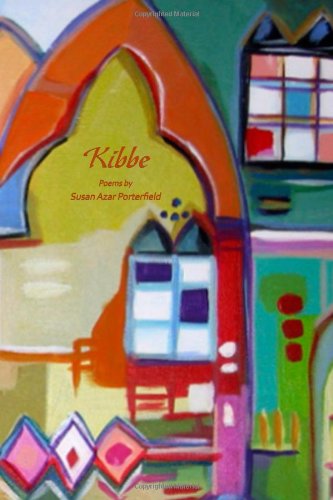
Kibbe
By Susan Azar Porterfield
Poetry. The pieces that make up KIBBE document a life spent journeying "Between Two Worlds": the author's America and the Lebanon of her family heritage. In Porterfield's vision, people and places long departed can be conjured back through memory and language; "the land of the father is remembered / by the child." That language cannot perform its function unless it can consider honestly and unapologetically the political, social, and spiritual rifts that seem to divide real people. We recognize the people in these poems even when they are distant from our homes and our minds: the fathers and mothers, the dictators, even the stranger driving the taxi through Beirut. Thanks to Porterfield's healing art, we find ourselves with them in the end, in a shared space where reconciliation and compassion are our only options.
In Kibbe, Susan Azar Porterfield movingly portrays the seeking of cultural roots in Lebanon and in her father’s former village of Kousba. What she offers is no less than a thrilling narrative of how we come to love the world, even among maimings, wars, and threats of translated confusions. These poems are political in the deepest sense—they thin the membrane between personal and public, demonstrating with clarity, grace, and even restraint, the reciprocity between one’s interior map and boundaries drawn in ink or blood.